Every language learner attending a Japanese lesson in Singapore will eventually have to become proficient at understanding verbal Japanese to reach fluency. If you intend to take the Japanese Language Proficiency Test (JLPT) exams, you may find the listening part of the test extremely difficult if you only ever hear Japanese in the classroom. This is because your brain and ears never truly got attuned to the language.
As such, it is vital to broaden your exposure to the Japanese language and constantly work on your listening skills. Neglecting to explore beyond your peers with the same level of proficiency means you will hardly fear hearing Japanese you do not know, which does not help improve your fluency.
To help you better grasp spoken Japanese, here are some practical ways to up your listening comprehension.
1. Leverage free resources online
There is an extensive range of Japanese media online that can help you work on your listening skills, from podcasts and audiobooks to radio shows, anime, and so much more, all with varying difficulty in terms of vocabulary and speaking speed. For starters, YouTube has a vast collection of resources you can use from which you can branch out and find the media that works best for your learning style. You can also check out our previous articles for popular TV shows that can aid you in learning Japanese.
Suppose you wish to gear your listening practice for the JLPT. In that case, you can try resources devoted to helping students prepare for the exam, like “jtest4you”, which includes listening questions in a quiz-style format that tests your comprehension of Japanese content using short audio tracks.
Each quiz contains a section that features the key vocabulary to take note of to make it easier for learners to review unfamiliar phrases and words. With sections for all levels from N5 to N1, “jtest4you” and websites like it will certainly become a valuable resource for your language learning journey.
2. Be proactive during listening practice
It is not enough to simply watch a Japanese drama or tune in to a Japanese podcast. Ideally, you should also actively try to decipher or transcribe everything you hear since it is more effective at developing your listening abilities. Make use of the replay and playback speed adjustment options of media players to better hone in on what you are listening to and allow your mind to work out what it is hearing.
Also, consider parroting by taking a particular clip or dialogue, listening to it on loop, and trying to imitate it. This approach is not just on hearing but more so listening since you need to pick apart and replicate the distinct sounds of Japanese speech. Mastering this method of imitation can do wonders for your listening skills.
3. Listen to Japanese in real-time
Although practising in the safety of your home does help further your listening skills, listening and understanding spoken Japanese in real-time by interacting with people and having actual conversations will always be better at advancing your comprehension skills.
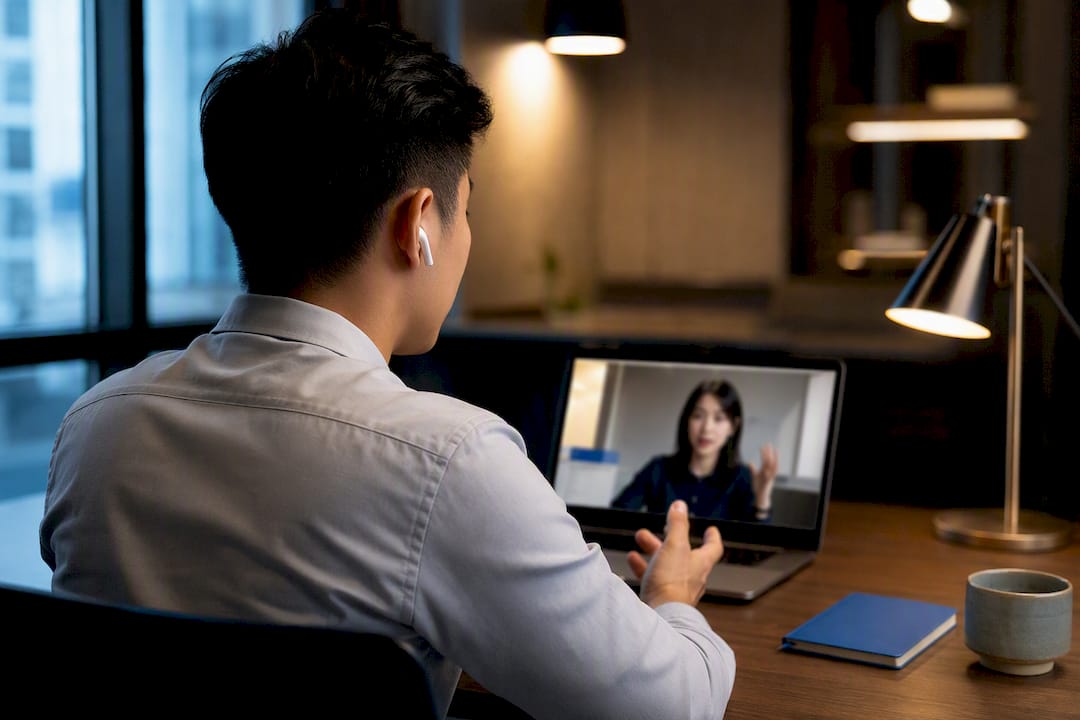
A convenient way to experience real-world Japanese is by taking part in an online language exchange programme and helping out a fellow language learner while working on your listening comprehension. If you are taking a Japanese course in Singapore, try asking your teacher if they can spare some time to help you with your conversation practice one-on-one or if they know someone else who is just as fluent as them to help you out.
4. Put on Japanese audio as background noise
Passive listening can be just as important as active listening, especially if you do plenty of it throughout the day. One way to engage in passive listening activity is by playing spoken Japanese as background noise whenever you can, like driving to work, doing chores, or any other activities that do not require concentration. Listening to Japanese in the background helps train your brain to hear pronunciations and native Japanese accents without focusing on them. In time, you will notice that your subconscious brain can pick up new vocabulary you can use during active listening.
Conclusion
It is common to feel stuck in a rut when trying to improve your Japanese listening skills through conventional means. However, by trying out the proven listening practice tips above and putting in the effort, you are sure to reach your desired level of fluency sooner than later. Of course, there are plenty of other ways to get in some effective listening practice, so always be on the lookout for new things to keep your listening practice sessions engaging.
No matter your goals for learning Japanese, our exceptional and dedicated native instructors here at Japanese Explorer can help you achieve them in no time. Our proven and effective teaching methods are tailored to your needs and learning style and are available through private, group, and online lessons.
Want to learn Japanese in Singapore? Get in touch with us to learn more and get started with your Japanese language courses today!